
Guess That Artifact!
What Can It Be?
We will be sharing close-up pictures of some of our museum artifacts. Let us know what you think it is!
Archived
Guess That Artifact

Whale Ear Bone - The specimen was found by Mr. Pruitt in 1978 off of Assateague Island. The United States Department of the Interior Geological Survey identified it as the ear bone from the right whale, Eubalaena glacialis, and could be as much as 10,000 years old

Farming Tool - Corn Husker

11" Cast Iron Diving Boots

Ice Cream Cups with Spoon Holder was used at Schaefer’s Bakery and Ice Cream Parlor which was located at Baltimore Ave and Somerset St., Ocean City, MD, from 1896 to 1926.

Handmade wooden hat stretcher made by Mr. Samuel Quillen while stationed at the Isle of Wight Life-Saving Station at Ocean City, MD - Two semicircular oak blocks joined and adjustable by a screw and a 7" drop forged wrench used in operating the hat stretcher, c. 1920
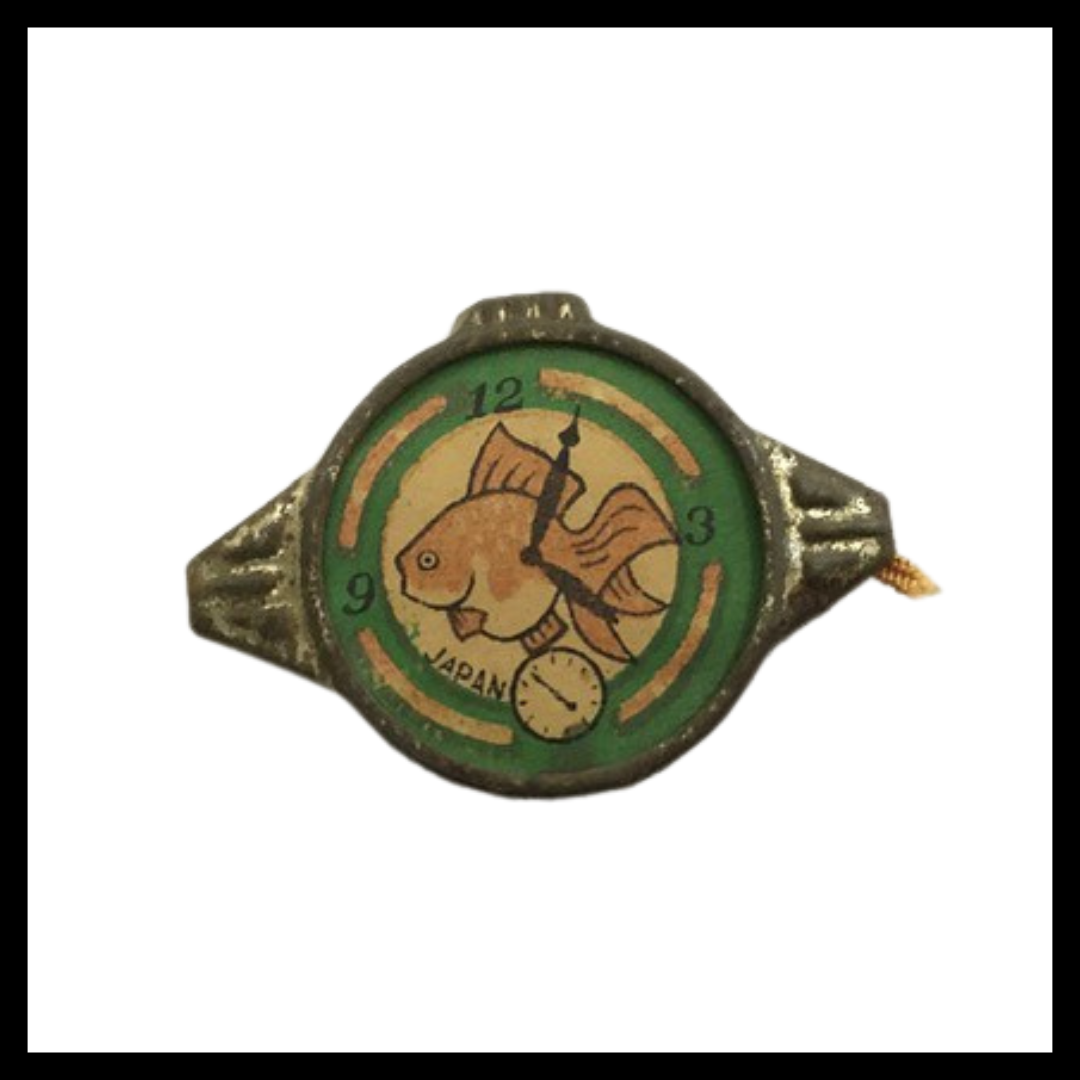
Toy watch face won as a game prize on the Ocean City Boardwalk.
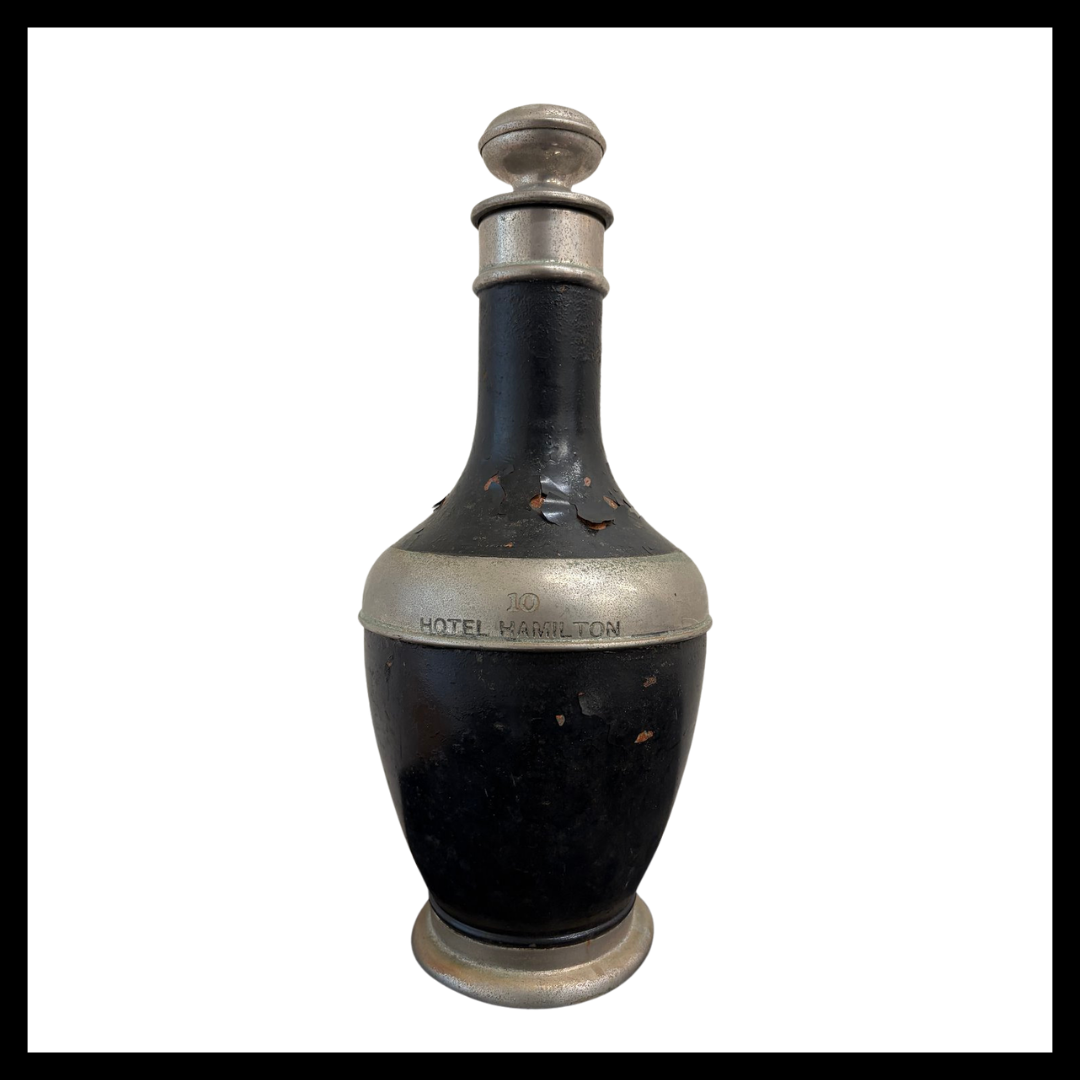
"Ferrostat" Vacuum Bottle, Hamilton Hotel, Boardwalk at 3rd Street, Ocean City, Maryland, Stanley Insulating Co., c. 1913 This was the first all-steel, unbreakable vacuum flask. Unlike contemporary silver-plated pieces, the Ferrostat used charcoal-insulated, double-walled steel to retain heat. Donated by Peter and Josephine Herring in honor of Peter's grandfather and grandmother: Franklin P. Waller & Aline W. Waller. They owned the hotel in the 1940s and early 1950s. Hamilton Hotel on 3rd and Boardwalk.
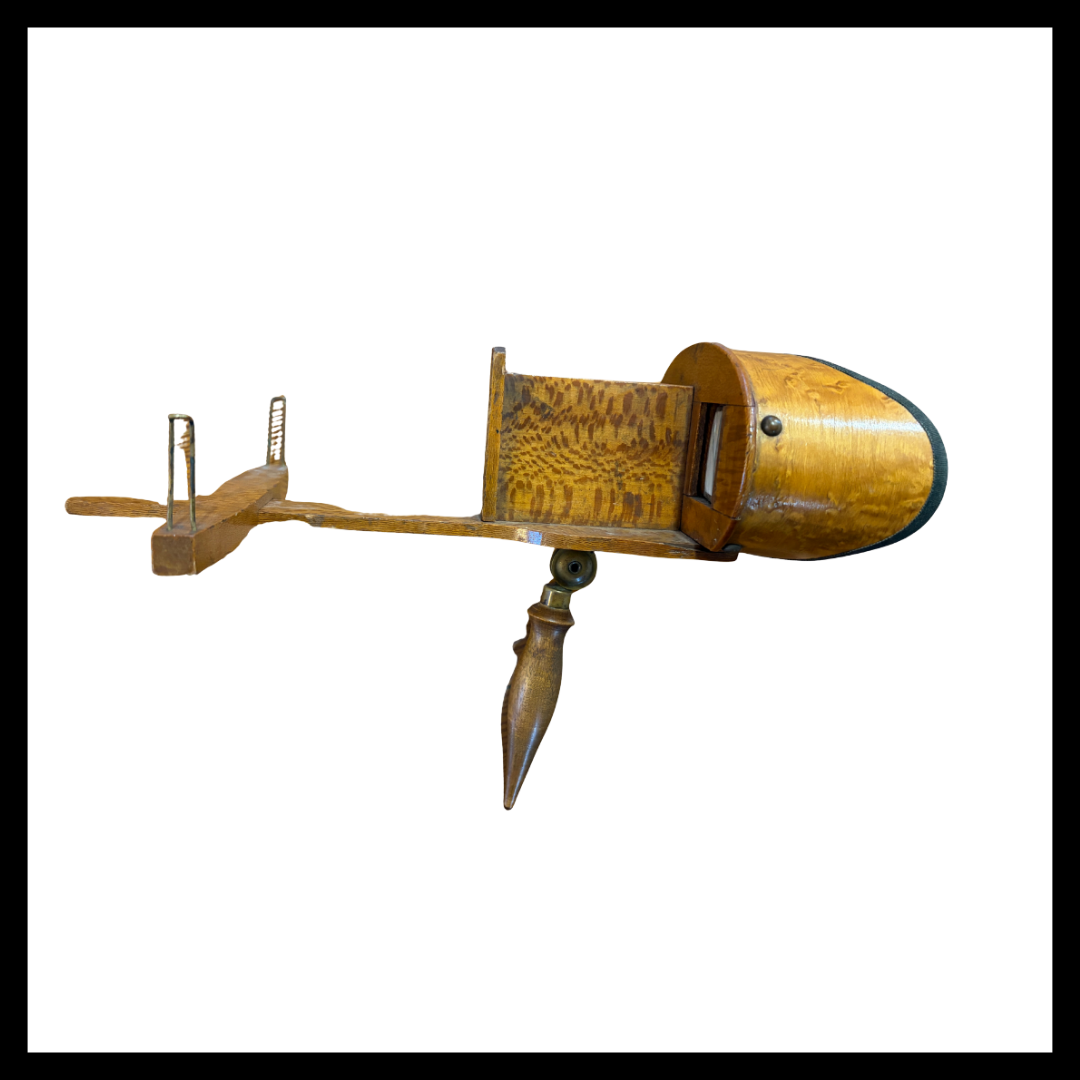
This artifact is a wooden Holmes-style stereoscope, dated July 24, 1888, was a popular form of home entertainment in the late 19th century. Designed to view paired photographs called stereographs or stereoviews, the device creates the illusion of depth, making images appear three-dimensional. Invented and refined by American physician Oliver Wendell Holmes Sr., this handheld viewer was simple, affordable, and widely used in middle-class households. Sets of stereoview cards—often featuring landscapes, famous landmarks, or scenes from around the world—allowed people to “travel” visually at a time when long-distance journeys were out of reach for many. This particular stereoscope offers a glimpse into how people experienced photography, education, and entertainment over a century ago.