

“Living in the Blueprint: How a Worcester County School Board Office Holds a Secret History” by Paityn Tyre, 2026 Scholarship Recipient
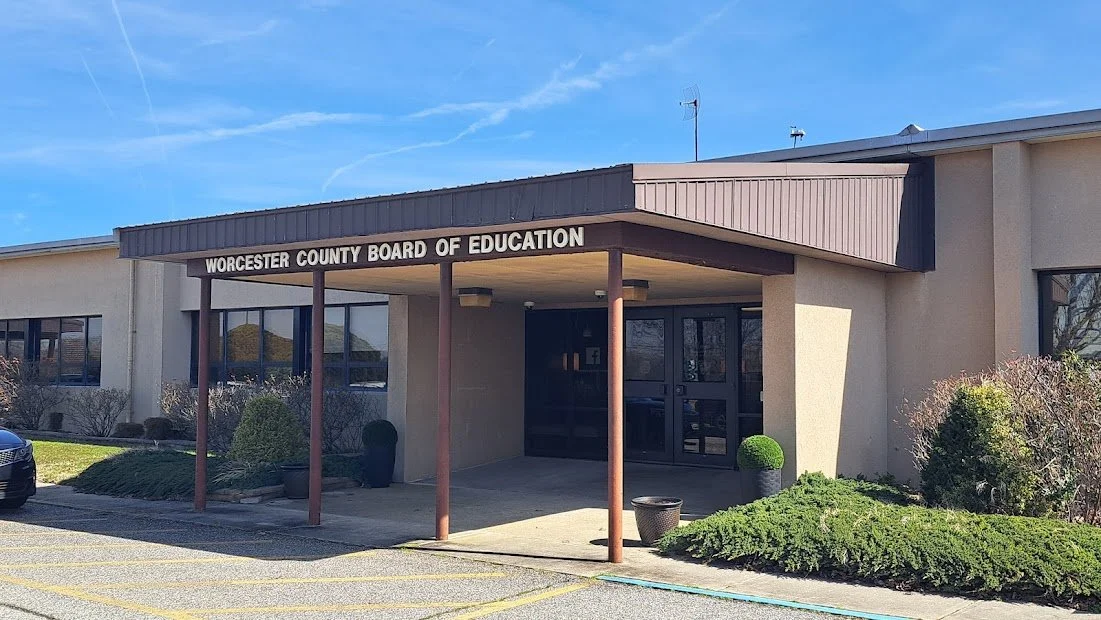
Newark, Maryland
Option One: Choose a historical event that occurred in Worcester County, MD, and discuss why it should be remembered.
When people talk about the Civil Rights movement, they usually bring up famous moments like Rosa Parks on the bus or Martin Luther King Jr. speaking in Washington. But some of the most intense battles for equality happened in quiet, rural places including right here in Worcester County, Maryland. In fact, if you drive through Newark today, you can find a massive piece of civil rights history hiding in plain sight at the Worcester County Board of Education administrative office.
Most people just see it as a boring government building where school budgets get approved. But during the Jim Crow era, this exact building was Worcester High School the only high school in the entire county for Black students. The irony is wild: the very system that used to enforce segregation is now run out of the building built to keep Black students separated. This building isn't just brick and mortar, it’s a living reminder of a community that fought for its rights, and it deserves to be recognized.
To understand why this matters, you have to look at how long Worcester County held out against change. The Supreme Court ruled that school segregation was illegal in 1954. Yet, Worcester County didn’t fully integrate its schools until the 1970–1971 school year. That made it the absolute last county in Maryland to desegregate, and one of the last few dozen in the entire country. For nearly twenty years after the law changed, Worcester High School was the only place Black teenagers from grades 7 through 12 could go to get an education.
Even though the county underfunded the school compared to white schools, the community refused to let their kids get left behind. Black teachers demanded absolute excellence, and local families stepped up to support the students. The school became a tightknit powerhouse, producing successful community leaders, scholars, and even pro athletes like NBA draft pick Talvin Skinner.
When the schools finally integrated in 1970, the county shut down Worcester High as a regular school. Instead of tearing it down or selling it, the Board of Education turned it into their main headquarters.Think about that for a second. The administrative decisions made today about local students, teachers, and school funding are happening in the exact same rooms where white school officials once voted to keep Black and white students apart. The history is built right into the walls.
Thankfully, that history isn't being erased. Local alumni worked hard with the school board to set up a permanent exhibit at the front entrance of the building. Now, when visitors walk into the board office, the first things they see are the photos, trophies, and stories of Worcester High School.
This story is perfect for scholarship recognition because it shows that history isn’t just something found in old textbooks. It’s alive in our own backyards. It proves that even when progress takes way too long, a community’s determination can leave a permanent mark that the system can never wipe away.